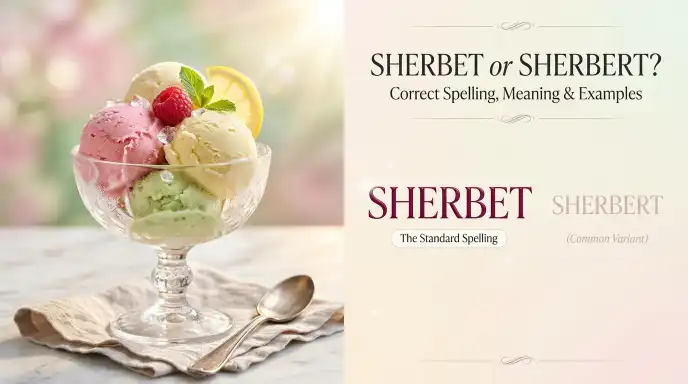
Sherbet is the standard spelling, while sherbert is a common spelling variation that adds an extra “r.” Both words are used when talking about a sweet, refreshing treat, but sherbet is the preferred spelling in standard English. If you have seen both spellings on menus, in recipes, or on social media, you may wonder which one is correct.
The answer depends partly on where you live and how the word is used.People often search for “sherbert or sherbet” because the two words sound almost the same. The extra “r” can be easy to hear, even though it does not belong in the standard spelling. This can make the word confusing for students, writers, and anyone who wants to use correct English.
Sherbet can refer to a frozen dessert in American English. In British English, it can also mean a fizzy sweet powder or a sweet drink. The exact meaning depends on the country and context. This guide explains the correct spelling, meaning, history, and everyday use of both words. You will also learn how to avoid common mistakes and choose the right form for your audience.
Sherbert or Sherbet: Quick Answer
Sherbet is the standard spelling. Sherbert is a common variant, but it is generally not preferred in formal writing.
Both forms are used in English, and many people say “sherbert” in everyday conversation. However, if you are writing a school assignment, recipe, article, menu, or professional email, choose sherbet.
Here is the difference at a glance:
- Sherbet: The standard spelling for a sweet frozen treat or, in some varieties of English, a sweet drink or fizzy powder.
- Sherbert: A common alternative spelling that adds an extra “r.”
- Best choice: Use sherbet in formal writing and when you want the standard spelling.
Examples:
- We bought lemon sherbet after dinner.
- This recipe uses raspberry sherbet and fresh fruit.
- My grandfather calls the dessert sherbert, but the standard spelling is sherbet.
Remember: If you are unsure which spelling to use, choose sherbet.
Definition and Meaning of Sherbert and Sherbet
The words sherbet and sherbert are closely related in everyday use. The main difference is their spelling, not the treat people usually mean.
What Does Sherbet Mean?
Sherbet is a sweet food or drink. Its meaning changes depending on the region.
In American English, sherbet usually means a frozen dessert made with fruit, sugar, and water, often with a small amount of milk or another dairy ingredient. It is usually lighter than ice cream and often has a fruity taste.
Common flavors include:
- Lemon sherbet
- Orange sherbet
- Raspberry sherbet
- Lime sherbet
- Rainbow sherbet
In British English, sherbet may refer to a fizzy sweet powder that tingles on the tongue. It can also refer to a sweet drink in some cultural and historical contexts.
Examples:
- We served orange sherbet at the summer party.
- The children enjoyed the fizzy sherbet sweets.
- She made a refreshing lemon sherbet drink.
The surrounding words usually make the intended meaning clear.
What Does Sherbert Mean?
Sherbert is a common alternative form of sherbet. People often use it when speaking about the frozen dessert.
The extra “r” may appear because speakers hear or pronounce the word that way. However, most standard dictionaries and formal writing favor sherbet.
Examples:
- We ordered mango sherbert at the ice cream shop.
- He always says sherbert instead of sherbet.
- The recipe calls for orange sherbet, not sherbert.
The first two examples show the common variant in use. The third uses the standard spelling.
Are Sherbet and Sherbert Different Desserts?
Usually, no. In everyday American usage, both forms generally refer to the same type of frozen treat.
The extra “r” does not normally indicate a different flavor, recipe, or ingredient.
However, sherbet itself can have different meanings in different countries. A frozen fruit dessert in the United States is not necessarily the same thing as fizzy sherbet powder in the United Kingdom.
Sherbet vs. Sorbet
Sherbet is also easy to confuse with sorbet. These are related frozen treats, but they are not always made the same way.
Sorbet is generally made from fruit, water, and sugar without dairy. American style sherbet often contains a small amount of milk or other dairy ingredients.
For example:
- Lemon sherbet may contain milk.
- Lemon sorbet is usually dairy free.
Always check the ingredients if you have a dairy allergy or follow a dairy free diet.
The Origin of Sherbet and Sherbert

The word sherbet has a long history. Its journey through different languages helps explain why it may look or sound unusual to English speakers.
Sherbet is linked to the Turkish word şerbet, the Persian word sharbat, and the Arabic word sharba, associated with drinking. These words refer to sweet drinks or related refreshments.
Over time, the word traveled through languages and cultures. Sweet fruit drinks were popular in many regions, and the name became associated with different types of refreshments.
As the word entered English, its meaning developed. In some places, it referred to a sweet drink. In others, it became associated with frozen desserts or fizzy sweets.
The spelling sherbet became the standard English form. The variant sherbert developed through common speech and spelling habits.
One likely reason for the extra “r” is that speakers naturally adjust unfamiliar sounds to patterns that feel easier to say. This process can influence spelling over time.
However, the extra letter does not have a separate historical meaning that distinguishes a different dessert.
The word’s history explains its different meanings, while everyday pronunciation helps explain the sherbert variation.
British English vs. American English Spelling
Both British and American English use the spelling sherbet. The main regional difference concerns the meaning of the word, rather than a formal spelling rule.
In American English, sherbet most often describes a frozen fruit dessert. In British English, it can describe fizzy powder or sweets, although the word may also be used for drinks and frozen treats.
Sherbert appears in informal use in both varieties, but sherbet remains the standard spelling.
Comparison Table: British vs. American English
| Feature | American English | British English |
| Standard spelling | Sherbet | Sherbet |
| Common variant | Sherbert | Sherbert |
| Common meaning | Frozen fruit dessert | Fizzy powder or sweets; meanings vary |
| Formal writing | Sherbet | Sherbet |
| Extra “r” spelling | Informal variant | Informal variant |
| Best choice for learners | Sherbet | Sherbet |
Examples in American English
- We bought rainbow sherbet for the barbecue.
- The store sells orange sherbet in large tubs.
- I made a fruit punch with raspberry sherbet.
Examples in British English
- The children bought fizzy sherbet sweets.
- He enjoyed a traditional sherbet drink.
- The shop sells lemon flavored sherbet powder.
Do not assume that sherbet means exactly the same thing in every country. The spelling can stay the same even when the product changes.
Which Spelling Should You Use?
The best spelling depends on your audience and purpose. In most situations, sherbet is the safest choice.
For American Readers
Use sherbet when writing about frozen desserts, recipes, restaurant menus, or food products.
For example:
“The recipe uses two cups of orange sherbet.”
This spelling is widely understood and suitable for both casual and formal writing.
For British Readers
Use sherbet when referring to fizzy powder, sweets, or a sweet drink. If you are discussing a frozen dessert, make the meaning clear through the context.
For example:
“She bought a packet of raspberry sherbet sweets.”
If your article is about a frozen dessert, describe the ingredients so readers understand which product you mean.
For Students and ESL Learners
Choose sherbet in essays, homework, examinations, and vocabulary exercises.
Learning the standard form first helps you avoid confusion. You can recognize sherbert as a variant without using it in your own formal work.
For Bloggers, Writers, and Editors
Use sherbet in article titles, headings, recipes, and explanatory content. If your topic is the spelling difference itself, mention sherbert as the common variant.
For example:
“Is It Sherbert or Sherbet? The Correct Spelling Explained”
This title includes both forms while clearly identifying the standard spelling.
For Global Audiences
Use sherbet and explain what you mean if the regional meaning matters.
For example, a recipe could say “American style fruit sherbet” to distinguish the frozen dessert from British sherbet powder.
Professional advice: Use sherbet as your default spelling, and add a short explanation when readers may interpret the word differently.
Common Mistakes with Sherbert and Sherbet
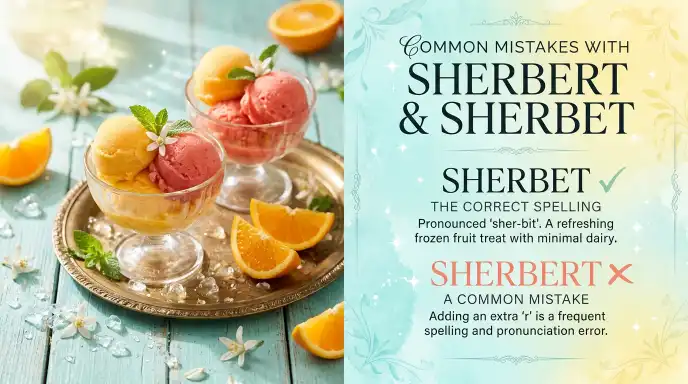
These words cause confusion because they sound similar and are often used in the same situations. Knowing the common mistakes makes them easier to handle.
Mistake 1: Adding an Extra “R” in Formal Writing
Incorrect for standard spelling: “We served strawberry sherbert.”
Preferred: “We served strawberry sherbet.”
Sherbert is recognizable, but sherbet is the better choice for formal writing.
Mistake 2: Thinking Both Words Name Different Desserts
Some people assume sherbet and sherbert are two separate products.
In ordinary American usage, they usually refer to the same kind of treat. The spelling difference does not normally identify a separate recipe.
Mistake 3: Confusing Sherbet with Sorbet
Sherbet and sorbet are related, but their ingredients can differ.
Sherbet often contains some dairy in the United States. Sorbet is generally dairy free.
Do not use the words interchangeably when ingredients are important.
Mistake 4: Assuming Sherbet Always Means Ice Cream
Sherbet is not always a frozen dessert. In British English, it may refer to a fizzy powder or sweets.
Always consider the country and context before deciding what the word means.
Mistake 5: Using Sherbert in a Formal Recipe
If you are publishing a recipe, use the standard spelling consistently.
Preferred: “Stir the lemon sherbet into the fruit mixture.”
Consistency makes your writing easier to follow and more professional.
Mistake 6: Correcting Every Speaker in Conversation
Someone may say sherbert in casual conversation. That does not mean you need to interrupt them.
The variant is common enough to be understood by many English speakers. Choose sherbet for standard writing, but consider the situation before correcting someone else’s speech.
Sherbert or Sherbet in Everyday Examples
Examples show how the words work in real situations. The following sentences cover everyday conversation, emails, news, social media, and formal writing.
Everyday Conversation
- We bought lemon sherbet to enjoy after lunch.
- My sister calls it sherbert, but I use the standard spelling.
- Would you like orange sherbet or vanilla ice cream?
- The shop sells several flavors of sherbet.
- Grandma made a refreshing fruit sherbet for the family.
Emails and Messages
- Please add raspberry sherbet to the shopping list.
- I will bring orange sherbet to the birthday party.
- Could you confirm if the dessert contains dairy? I would like to check the sherbet ingredients.
News and Food Writing
- The restaurant introduced a new lemon sherbet for its summer menu.
- The local shop has added traditional fizzy sherbet sweets to its collection.
- The food review praised the mango sherbet for its fresh fruit flavor.
Social Media
- This homemade raspberry sherbet is perfect for a warm day.
- Which do you prefer: orange sherbet or lemon sorbet?
- I grew up saying sherbert. What do you call this frozen treat?
Formal Writing
- The recipe requires one cup of orange sherbet.
- The article explains the difference between sherbet and sorbet.
- The menu identifies the dessert as fruit sherbet.
- The teacher explained why sherbet is the standard spelling.
These examples show that sherbet fits many kinds of writing. Sherbert can appear when discussing informal speech or the spelling variation itself.
Sherbert or Sherbet: Google Trends and Usage Data
People may search for sherbert or sherbet when looking for a dessert recipe, checking a menu, or trying to confirm the correct spelling. The two forms have different roles in search behavior.
Sherbet is the standard spelling, while sherbert is a common variant that people may search because they hear or remember the word differently.
Which Spelling Is More Common?
Sherbet is the preferred spelling in standard dictionaries and formal writing. Sherbert is also found in everyday usage, particularly when people spell the word as they pronounce it.
However, exact search popularity can change over time and by location. Without a current, verified Google Trends comparison, it would be misleading to give exact search volumes or claim a specific percentage difference.
Search Interest by Country
The meaning of sherbet can influence what people search for.
- United States: Searches may relate to frozen desserts, flavors, recipes, and the difference between sherbet and sorbet.
- United Kingdom: Searches may relate to fizzy sherbet powder, sweets, drinks, or frozen desserts.
- Canada and Australia: The meaning may depend on the product and context, so clear descriptions can help.
- International audiences: People may search both spellings to check which form is correct or to understand the word’s meaning.
These are reasonable contextual distinctions, not verified rankings of search volume by country.
How to Compare the Two Terms on Google Trends
To check current interest, compare sherbet and sherbert in Google Trends. Select the countries you want to study, choose the same time range, and review the results for both terms.
Pay attention to three things:
- Interest over time: See if searches rise during certain periods, such as warmer months.
- Regional interest: Check which locations show relatively higher interest in each term.
- Related searches: Look for queries about recipes, flavors, spelling, and pronunciation.
Google Trends reports relative search interest, not exact monthly search counts. Its results can also vary according to the selected location and period.
For writers, the practical lesson is simple: use sherbet as the standard spelling, and explain sherbert when the spelling difference is relevant to the topic.
Sherbet vs. Sherbert: Main Differences
The table below summarizes the key points.
| Feature | Sherbet | Sherbert |
| Spelling status | Standard spelling | Common variant |
| Extra “r” | No | Yes |
| Formal writing | Preferred | Usually avoided |
| Everyday speech | Widely used | Also used by many speakers |
| American meaning | Usually a frozen fruit dessert | Usually the same dessert |
| British meaning | May mean powder, sweets, drinks, or a frozen treat | Usually a variant of the same word |
| Best use | General and professional writing | Discussing informal usage or spelling variation |
The main distinction is spelling, not a separate type of dessert. Regional meanings belong to sherbet itself and should be understood through context.
Frequently Asked Questions
1. Is it sherbert or sherbet?
Sherbet is the standard spelling. Sherbert is a common variant, but sherbet is preferred in formal writing, recipes, and professional content.
2. Why do people say sherbert?
Some people pronounce sherbet with an extra “r” sound. This pronunciation can influence how they spell the word. The variant is common in everyday English.
3. Is sherbert a real word?
Sherbert is a recognized spelling variant in English usage. However, sherbet is the standard form and is the safer choice for formal writing.
4. What is the difference between sherbet and sorbet?
Sherbet often contains a small amount of dairy in American English, while sorbet is generally made without dairy. Both can contain fruit, water, and sugar.
5. Is sherbet British or American?
Sherbet is used in both British and American English. In the United States, it usually refers to a frozen dessert. In Britain, it can also refer to fizzy powder or sweets.
6. How do you spell sherbet in plural form?
The plural form is sherbets. For example: “The shop sells several fruit sherbets.”
7. Is sherbet the same as ice cream?
No. American style sherbet usually contains less dairy than ice cream and often has a stronger fruit flavor. Ice cream generally contains more dairy fat.
8. Which spelling should I use in a recipe?
Use sherbet. It is the standard spelling and is appropriate for recipes, menus, cookbooks, and food articles.
9. Does sherbet always contain milk?
No. Ingredients vary by recipe and product. American style sherbet often contains some dairy, but you should check the ingredient list if dairy matters to you.
Conclusion: Sherbert or Sherbet?
Sherbet is the standard spelling, while sherbert is a common variation used by many English speakers. Although both forms may refer to the same frozen treat in everyday American English, sherbet is the preferred choice for formal writing, recipes, menus, and professional articles.
The word also has different meanings around the world. In American English, it usually describes a sweet frozen dessert made with fruit and often some dairy. In British English, it may refer to fizzy powder, sweets, or a sweet drink. Context helps readers understand which meaning is intended.
It is also worth remembering that sherbet and sorbet are not always the same. Sorbet is generally dairy free, while sherbet may contain milk or other dairy ingredient.
If you are a student, writer, blogger, or English learner, keep the rule simple: write sherbet when you want the standard spelling. Recognize sherbert as a common variant, but avoid it in formal work unless you are discussing the variation itself.
This small spelling choice can make your writing clearer and help you communicate confidently with readers from different English speaking regions.
🌸 Explore More:
Bleed or Bled: Correct Spelling, Meaning & Examples

Hi, I’m Ava Collins, a writer and English language enthusiast behind CorrectlyWritten. I’m passionate about making grammar simple, clear, and easy to understand. I write about grammar rules, confusing words, spelling, and everyday English usage to help readers write more accurately and confidently.