
Fuelled and fueled are both correct spellings. The main difference is regional. British English, Canadian English, and some other varieties often use fuelled. American English generally prefers fueled.
Both words are forms of the verb fuel, which means to supply energy or power. The word can also describe something that gives strength, motivation, or support to an activity or feeling. For example, a car can be fuelled by petrol, while ambition can be fueled by a desire to succeed. The meaning stays the same in both spellings.
Only the spelling changes. If you are unsure which form to use, consider your audience and follow one spelling style throughout your writing. This guide explains the difference between fuelled and fueled, their meanings, grammar rules, origins, common mistakes, and everyday examples.
Fuelled or Fueled: Quick Answer
Both fuelled and fueled are correct. Your choice depends mainly on the variety of English you follow.
- Fuelled: Common in British English.
- Fueled: Standard in American English.
- Meaning: Both mean supplied with fuel, energy, or motivation.
- Verb forms: Both can serve as the past tense and past participle of fuel.
Examples:
- British English: The workers fuelled the generator.
- American English: The workers fueled the generator.
- British English: Her ambition fuelled her success.
- American English: Her ambition fueled her success.
The main rule is simple: use fuelled for Britishstyle spelling and fueled for Americanstyle spelling.
Definition and Meaning of Fuelled or Fueled
Fuelled and fueled are the pasttense and pastparticiple forms of the verb fuel. Both spellings have the same meaning.
The word fuel can refer to a substance that produces energy, such as petrol, diesel, gas, or coal. It can also describe something that increases an emotion, activity, or situation.
Fuelled or Fueled as a Physical Energy Source
Use the word when something supplies energy to a machine, vehicle, or system.
Examples:
- The company fuelled the aircraft before takeoff.
- The storm fueled the fire by spreading hot embers.
- The power station was fuelled by natural gas.
- The truck was fueled before its long journey.
Fuelled or Fueled as Motivation
The word can also describe something that encourages action or strengthens a feeling.
Examples:
- Her determination fuelled her success.
- Public anger fueled the debate.
- His curiosity fueled his interest in science.
- Their rivalry fueled the competition.
In these examples, the word describes an influence rather than a physical substance.
Why Are Fuelled and Fueled Spelled Differently?
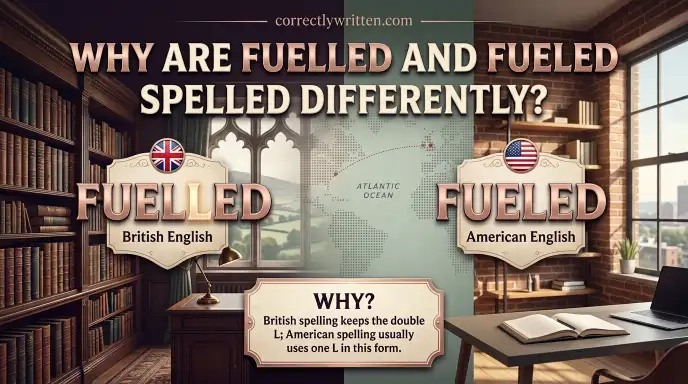
The difference comes from regional spelling conventions.
In British English, writers often double the final l when they add certain endings to words that end in a vowel followed by l. This pattern gives us fuelled.
American English usually keeps one l in this form, producing fueled.
The same pattern appears in other words:
- Travelled / Traveled
- Cancelled / Canceled
- Labelled / Labeled
- Modelling / Modeling
These pairs show a common spelling difference between British and American English.
However, spelling patterns can vary from word to word. It is best to check a reliable dictionary if you are unsure about a particular form.
Fuelled or Fueled in British and American English
Both spellings are correct, but different regions prefer different forms.
British English: Fuelled
British English generally uses fuelled.
Examples:
- The plane was fuelled before departure.
- The protest was fuelled by public frustration.
- Their success was fuelled by hard work.
- The machine needs to be fuelled regularly.
British writers usually double the l in this form.
American English: Fueled
American English generally uses fueled.
Examples:
- The plane was fueled before departure.
- The debate was fueled by public frustration.
- Her ambition fueled her progress.
- The vehicle was fueled before the trip.
American writers normally use one l.
What About Canadian and Australian English?
Canadian English often follows the British spelling fuelled, although Canadian usage can include American influences. Australian English also generally uses fuelled.
If you write for a particular publication, check its style guide. A publication may follow a specific spelling system regardless of local preferences.
Is Fuelled or Fueled a Verb?

Yes. Both words are verb forms.
The base verb is fuel. It means to provide something with fuel or to increase its energy, strength, or intensity.
Here are the main forms:
- Base form: fuel
- Thirdperson singular: fuels
- Past tense: fuelled or fueled
- Past participle: fuelled or fueled
- Present participle: fuelling or fueling
Examples:
- We fuel the generator every morning.
- The engine fuels the heating system.
- They fuelled/fueled the vehicle yesterday.
- She is fuelling/fueling her ambition through hard work.
The spelling of the past tense and present participle depends on the regional style you follow.
Fuelled or Fueled in Everyday Examples
These examples show how both spellings work in different contexts.
Cars and Transportation
British English:
- The driver fuelled the car before leaving.
- The bus was fuelled at the depot.
- The airline fuelled the aircraft before takeoff.
American English:
- The driver fueled the car before leaving.
- The bus was fueled at the depot.
- The airline fueled the aircraft before takeoff.
Business and Economics
British English:
- Higher demand fuelled business growth.
- The new investment fuelled expansion.
- Rising costs fuelled concerns among customers.
American English:
- Higher demand fueled business growth.
- The new investment fueled expansion.
- Rising costs fueled concerns among customers.
Emotions and Motivation
British English:
- Her confidence fuelled her ambition.
- His frustration fuelled the argument.
- Their passion fuelled the project.
American English:
- Her confidence fueled her ambition.
- His frustration fueled the argument.
- Their passion fueled the project.
News and Public Discussion
British English:
- The announcement fuelled public debate.
- The report fuelled speculation.
- The decision fuelled criticism.
American English:
- The announcement fueled public debate.
- The report fueled speculation.
- The decision fueled criticism.
The meaning remains the same in every example.
Common Mistakes with Fuelled and Fueled
Writers often make spelling mistakes when they mix regional styles. These simple rules can help.
Mistake 1: Mixing British and American Spelling
A writer may use fuelled in one paragraph and fueled in the next without a reason.
Better approach: Choose one spelling style and use it consistently.
Mistake 2: Thinking One Spelling Is Always Wrong
Neither spelling is universally incorrect.
- Fuelled is standard in British English.
- Fueled is standard in American English.
Choose the form that suits your audience.
Mistake 3: Using the Wrong Verb Form
The past tense is fuelled or fueled, not fuel when the sentence refers to a completed past action.
Incorrect: Yesterday, the team fuel the generator.
Correct: Yesterday, the team fuelled the generator.
American English: Yesterday, the team fueled the generator.
Mistake 4: Forgetting Consistency in Content
If your article targets American readers, use fueled, fueling, and other American forms consistently. If it targets British readers, use fuelled and fuelling.
Consistency improves the reading experience and helps maintain a clear editorial style.
Fuelled vs Fueled: Main Differences
Fuelled
- Preferred in British English.
- Usually used in Australian English.
- Often used in Canadian English.
- Contains a double l.
- Has the same meaning as fueled.
Fueled
- Preferred in American English.
- Contains a single l.
- Common in American publications and websites.
- Has the same meaning as fuelled.
Neither spelling changes the meaning or pronunciation in ordinary use.
How to Choose the Right Spelling
Use these simple guidelines when writing.
- For a British audience: Choose fuelled.
- For an American audience: Choose fueled.
- For an Australian audience: Fuelled is generally preferred.
- For a Canadian audience: Fuelled is common, but check the publication’s style guide.
- For an international audience: Choose a consistent spelling system that fits your main readership.
For articles, audience matters. If your website targets readers in the United States, fueled may fit better. If you target British readers, fuelled is usually the better choice.
Do not switch between forms simply to repeat a keyword. Write naturally and prioritize clarity.
Frequently Asked Questions
Q1. Is fueled one L or two?
Fueled is spelled with one L in American English. In British English, the standard spelling is fuelled, with two Ls. Both spellings are correct, depending on the variety of English you use.
Q2. What does “fueled” mean?
Fueled is the American English past tense and past participle of fuel. It means supplied with energy or power, or caused something to grow stronger. For example, “The car was fueled before the trip” or “Her determination fueled her success.”
Q3. What does “fuelled” mean?
Fuelled is the British English spelling of the past tense and past participle of fuel. It means supplied with fuel or energy, or intensified something. For example, “The debate was fuelled by public concerns.”
Q4. Which is correct, fueling or fuelling?
Both are correct. Fueling is the standard American English spelling, while fuelling is the standard British English spelling. For example, “The team is fueling the generator” (American English) and “The team is fuelling the generator” (British English).
Q5. Which is correct, “fueled” or “fuelled”?
Both fueled and fuelled are correct spellings. Use fueled for American English and fuelled for British English. For consistency, follow the spelling convention used throughout your article or other writing.
Q6. What does “fueling myself” mean?
Fueling myself means giving yourself the energy or resources you need to function, work, exercise, or pursue a goal. It can refer to eating nourishing food, getting enough rest, or finding motivation. For example, “I am fueling myself with a healthy breakfast before my workout.”
Q7. What does “stuffing yourself” mean?
Stuffing yourself means eating so much food that you feel very full or uncomfortable. It is an informal expression and can sometimes sound humorous or critical. For example, “I stuffed myself with pizza at the party.”
Q8. Is it “fueling” or “refueling”?
Both words are correct, but they have different meanings. Fueling means supplying something with fuel or energy, while refueling means supplying it with fuel again. For example, “The crew is fueling the aircraft” and “The driver is refueling the car.” In British English, these are usually spelled fuelling and refuelling.
Final Thoughts
Fuelled and fueled are both correct spellings. British English generally prefers fuelled, while American English uses fueled. Both forms describe supplying energy or increasing the strength of an emotion, activity, or situation.
Remember the simple distinction: British spelling usually doubles the l, while American spelling keeps one l.
Use fuelled for Britishstyle writing and fueled for American style writing. If you follow one spelling system throughout your article, your content will remain clear, consistent, and professional.
💡 Unlock Better Writing:
By or Bye: Meaning, Differences & Correct Usage

Hi, I’m Ava Collins, a writer and English language enthusiast behind CorrectlyWritten. I’m passionate about making grammar simple, clear, and easy to understand. I write about grammar rules, confusing words, spelling, and everyday English usage to help readers write more accurately and confidently.








2 thoughts on “Fuelled or Fueled: Correct Spelling, Meaning & Usage ”