Senpai is the standard spelling of a Japanese word used for someone who has more experience or seniority than another person. Sempai is also seen in English, but senpai is the more common spelling in Japanese romanization and anime culture. Many people search for “sempai or senpai” because both forms appear online, especially in anime, manga, and social media posts.
The confusion comes from the way Japanese sounds can change when people write them with English letters. In Japanese, the word is written as 先輩 and is commonly romanized as senpai. It refers to a senior student, a more experienced coworker, or someone who joined a group before you. Anime fans often use the word when a character admires or looks up to an older or more experienced person.
However, senpai does not always mean a romantic crush. Its meaning depends on the relationship and situation. In this guide, you will learn the correct spelling, meaning, origin, common mistakes, and everyday uses of senpai and sempai.
Sempai or Senpai : Quick Answer
Senpai is the standard spelling in Japanese romanization. Sempai is a variant spelling that appears because of how the sound is pronounced and represented.
Both forms may appear in English writing, but senpai is the better choice for most readers, especially in anime, manga, and Japanese language contexts.
Examples:
- My senpai helped me with my schoolwork.
- The new employee learned from a senior senpai at work.
- The anime character wants their senpai to notice them.
Quick rule: Use senpai in general writing. Use sempai only when you are quoting a source, copying a title, or following a specific spelling choice.
Definition and Meaning of Senpai and Sempai
What Does Senpai Mean?
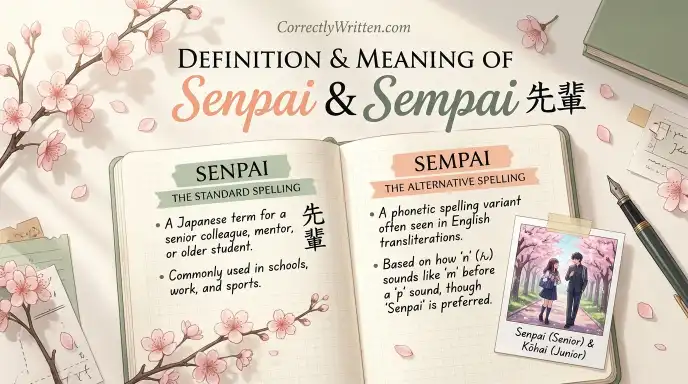
Senpai is a Japanese word for someone who has more experience or seniority than another person in a school, workplace, club, or other group.
A senpai may be an older student, an experienced coworker, or a member who joined a group before you.
Examples:
- My senpai taught me how to use the new equipment.
- She asked her senpai for advice.
- The younger students respect their senpai.
In simple words, a senpai is someone who has more experience or seniority in a shared setting.
What Does Sempai Mean?
Sempai is an alternative spelling of senpai. People sometimes use it in English because the sound of the Japanese word can seem closer to an “m” sound before the following consonant.
However, senpai is the standard spelling in common Japanese romanization. If you are learning Japanese or writing about Japanese culture, senpai is usually the safest choice.
Examples:
- The character calls the older student sempai.
- Some fans write sempai in online discussions.
- The title uses the spelling sempai.
Does Senpai Mean Crush?
No. Senpai does not directly mean “crush” or “love interest.” It describes a person with more seniority or experience in a group.
Anime and manga often show a character admiring their senpai. This can create a romantic meaning in a particular story, but the word itself does not mean romance.
For example:
- She respects her senpai because he helps her study.
- The character has a crush on her senpai.
The second sentence adds romantic interest. The word senpai alone does not.
The Origin of Senpai and Sempai
Where Does the Word Senpai Come From?
Senpai comes from Japanese. It is written as 先輩.
The word combines two Japanese characters:
- 先: Before, earlier, or ahead.
- 輩: A person of the same group or generation.
Together, the word refers to someone who came before another person in a group or has greater seniority.
Japanese schools, workplaces, clubs, and other groups use this term to describe relationships based on experience or length of membership.
Why Do People Write Sempai?
The spelling sempai comes from a pronunciation pattern in Japanese. The sound represented by n can change before certain consonants, including sounds similar to p.
As a result, some people hear or write the word as sempai. However, the standard romanized spelling remains senpai.
The difference comes from how people represent the sound, not from a difference in meaning.
How Did Senpai Become Popular in Anime?
Anime and manga introduced the word to many people outside Japan. Stories often show younger students looking up to older students or less experienced characters learning from senior characters.
Online communities then adopted senpai as a familiar term. Some fans also use it humorously when they want someone they admire to notice them.
This online use is popular, but the word still has a broader meaning in Japanese.
British English vs American English Spelling
Is Senpai Spelled Differently in British and American English?
No. British and American English generally use the same spelling: senpai. The alternative sempai also appears in English, but it is not a separate British or American form.
| Feature | British English | American English |
| Standard spelling | Senpai | Senpai |
| Variant spelling | Sempai | Sempai |
| Meaning | Senior or more experienced person | Senior or more experienced person |
| Anime usage | Common | Common |
| Preferred general form | Senpai | Senpai |
Examples in British English
- My senpai helped me prepare for the exam.
- The student asked her senpai for advice.
- The anime character admires their senpai.
Examples in American English
- My senpai showed me how to complete the task.
- He respects his senpai at the club.
- The character hopes their senpai will notice them.
Both varieties of English use senpai in the same way. You do not need to change the spelling for a British or American audience.
Which Spelling Should You Use?
For Japanese Language Learners
Use senpai. It is the standard romanized form and the best choice when learning Japanese vocabulary.
Example: My senpai helped me understand the lesson.
For Anime and Manga Fans
Use senpai in posts, comments, captions, and discussions. Most readers will recognize this spelling.
Example: I hope my favorite character’s senpai notices them!
For Academic or Professional Writing
Use senpai and explain its meaning when your audience may not know the word.
Example: In Japanese school culture, a senpai is a more senior student who may guide younger students.
For Social Media
Use senpai unless you are quoting a post, username, title, or source that uses sempai.
The main rule is simple: choose senpai for clear and standard writing.
Common Mistakes with Senpai and Sempai
Mistake 1: Thinking Sempai Is a Different Word
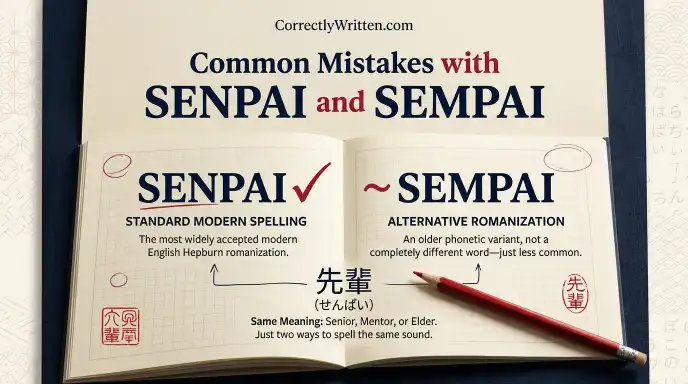
Incorrect claim: Sempai and senpai have completely different meanings.
Correct understanding: Both forms refer to the same Japanese term, but senpai is the standard spelling.
Mistake 2: Thinking Senpai Always Means Crush
Incorrect: Senpai means someone you love romantically.
Correct: Senpai means a senior or more experienced person. A romantic connection depends on the situation.
Mistake 3: Using Senpai for Every Older Person
The word does not simply mean any older person. It usually describes someone with greater seniority or experience within a shared group or setting.
For example, an older stranger is not automatically your senpai.
Mistake 4: Changing the Spelling Without a Reason
Incorrect: An article uses senpai in one paragraph and sempai in the next.
Better: Use senpai consistently unless you need to preserve a source’s original spelling.
Mistake 5: Confusing Senpai With Sensei
Senpai and sensei have different meanings.
- Senpai: A senior or more experienced member of a group.
- Sensei: A teacher, instructor, or other person addressed with this title.
A teacher may be a sensei, while an experienced student may be a senpai.
Senpai or Sempai in Everyday Examples
In Emails
- My senpai gave me helpful advice about the project.
- I would like to thank my senpai for guiding me during training.
In News Writing
- The report explored how the senpai relationship shapes student life in Japan.
- The article explained how new employees learn from senior coworkers.
On Social Media
- My favorite anime character finally noticed their senpai!
- Learning a new Japanese word today: senpai.
- Every beginner needs a helpful senpai.
In Formal Writing
- A senpai may guide a less experienced member of the same group.
- The term senpai describes a relationship based on seniority and experience.
In Anime and Manga Discussions
- The main character admires their senpai.
- Her senpai helps her prepare for the school festival.
- The story explores the bond between a student and their senpai.
Sentence Examples: Senpai or Sempai
- My senpai helped me learn the rules of the club.
- The younger student asked her senpai for advice.
- He respects his senpai at work.
- The anime character wants their senpai to notice them.
- My senpai showed me how to finish the project.
- The new student learned from an experienced senpai.
- She thanked her senpai for the helpful lesson.
- The story follows a student who admires their senpai.
- In Japanese culture, a senpai may guide a junior member.
- The fan used the spelling sempai when quoting an older post.
Senpai vs Sempai: Comparison Table
| Feature | Senpai | Sempai |
| Status | Standard spelling | Variant spelling |
| Meaning | Senior or experienced person | Same meaning |
| Japanese romanization | Common standard form | Less standard form |
| Anime usage | Very common | Also appears |
| Best choice for general writing | Yes | Usually not |
| Difference in meaning | None | None |
The main difference is spelling, not meaning. Use senpai for most writing.
FAQs About Senpai or Sempai
Q1. What does sempai mean?
Sempai is a less common spelling of senpai, a Japanese term for someone more experienced or senior in a school, workplace, club, or other group.
Q2. Are sempai and senpai the same?
Yes. Both refer to the same Japanese term, but senpai is the standard modern spelling in English. Sempai is an alternative spelling based on how the sound can be pronounced.
Q3. Does senpai mean crush?
No. Senpai does not literally mean “crush.” It refers to someone senior or more experienced, but in anime and online culture, people sometimes use it for someone they admire or have romantic feelings for.
Q4. Is senpai like Daddy?
No. Senpai means a senior or more experienced person. Daddy has a different meaning and may be used as a family term, affectionate nickname, or romantic expression depending on the context.
Q5. Can I call my boyfriend chan?
Yes. You can use chan as an affectionate Japanese name suffix for your boyfriend if he likes it. It often conveys fondness or closeness, but if it sounds natural depends on your relationship and personal preferences.
Q6. What is wifey in Japanese?
A common Japanese word for “wife” is tsuma (妻). Okusan (奥さん) is also commonly used when referring politely to someone else’s wife. For a playful nickname like “wifey,” the best expression depends on the relationship and context.
Q7. Can a girl call a guy kun?
Yes. A girl can call a boy or man kun. It is often used for boys, male classmates, colleagues, or someone younger or familiar. Its appropriateness depends on the relationship, age, and social setting.
Conclusion
Senpai is the standard spelling of a Japanese word for someone who has more experience or seniority in a group. Sempai is also seen in English, but senpai is the better choice for most readers. Both spellings refer to the same term, so the main difference is how people write the word.
The term is common in Japanese schools, workplaces, clubs, anime, and manga. It often describes a senior student or an experienced member who guides someone with less experience. Anime fans may also use it when talking about a character they admire. However, senpai does not automatically mean a romantic crush.
For schoolwork, articles, social media posts, and Japanese language learning, use senpai and keep the spelling consistent. Remember that sensei has a different meaning and usually refers to a teacher or instructor.
The easiest way to remember the correct form is to use senpai as your default spelling. It is clear, widely recognized, and suitable for both general English writing and discussions about Japanese culture.
🌟 Master Your Words:
Tepee or Teepee: Which Is Correct? Meaning and Examples

Hi, I’m Ava Collins, a writer and English language enthusiast behind CorrectlyWritten. I’m passionate about making grammar simple, clear, and easy to understand. I write about grammar rules, confusing words, spelling, and everyday English usage to help readers write more accurately and confidently.







2 thoughts on “Sempai or Senpai: Correct Spelling, Meaning, and Examples ”