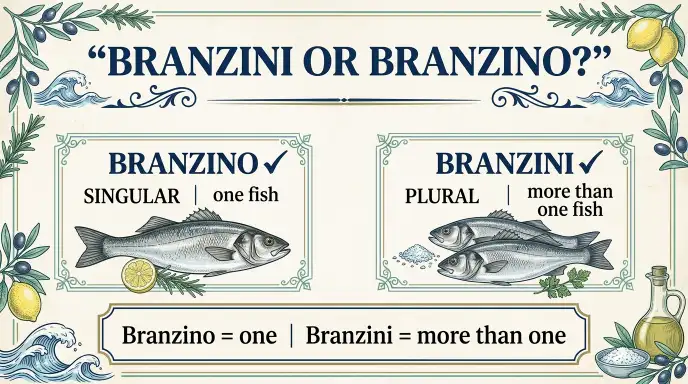
Branzino is the singular form, while branzini is the plural form of the Italian word for European sea bass. Both spellings are correct, but they are used differently. Branzino refers to one fish, while branzini refers to two or more fish.
In English speaking restaurants, menus, recipes, and food writing, however, the distinction can sometimes become confusing because both Italian forms are commonly used in English. For example, “I ordered a whole branzino” refers to one fish, while “The restaurant serves grilled branzini” refers to multiple fish. The word is especially common in Mediterranean and Italian cuisine, where the fish is often grilled, roasted, baked, or served whole.
Understanding the difference between branzino and branzini helps you read menus correctly, describe dishes accurately, and choose the right word when writing about seafood. In this guide, you will learn the meaning, Italian origin, singular and plural forms, pronunciation, common mistakes, everyday examples, and how the words are used in restaurants and food writing.
Branzini or Branzino: Quick Answer
Branzino is singular, and branzini is plural in Italian.
Use branzino when referring to one fish.
Example:
“I ordered a grilled branzino.”
Use branzini when referring to more than one fish.
Example:
“The chef prepared three whole branzini.”
The simple rule is:
One fish = branzino
Two or more fish = branzini
In English, branzino is commonly used as the name of the fish or a dish made from it, while branzini is often used when referring to multiple fish.
Definition and Meaning of Branzino and Branzini
What Does Branzino Mean?
Branzino is the Italian name commonly used for the European sea bass, a fish found in the Mediterranean and parts of the Atlantic.
The fish is known for its delicate white flesh and mild flavor. It is popular in Mediterranean and Italian cooking.
On a restaurant menu, branzino often refers to a whole European sea bass that has been grilled, roasted, baked, or otherwise prepared.
Examples:
- “The restaurant serves whole grilled branzino.”
- “I ordered branzino with lemon and herbs.”
- “The roasted branzino was served with vegetables.”
What Does Branzini Mean?
Branzini is the Italian plural of branzino.
It refers to two or more European sea bass.
For example:
- “The chef prepared two branzini.”
- “Fresh branzini were delivered to the restaurant.”
- “The menu included several roasted branzini.”
The i ending signals the plural form in Italian.
What Fish Is Branzino?
Branzino refers to the European sea bass, scientifically known as Dicentrarchus labrax.
It is a marine fish associated with the Mediterranean and eastern Atlantic regions.
In food culture, it is valued for its mild flavor, delicate texture, and versatility. It can be prepared in many ways, including grilling, roasting, baking, and pan searing.
In English speaking markets, the name branzino is particularly common in restaurants and seafood menus.
The Origin of Branzino and Branzini
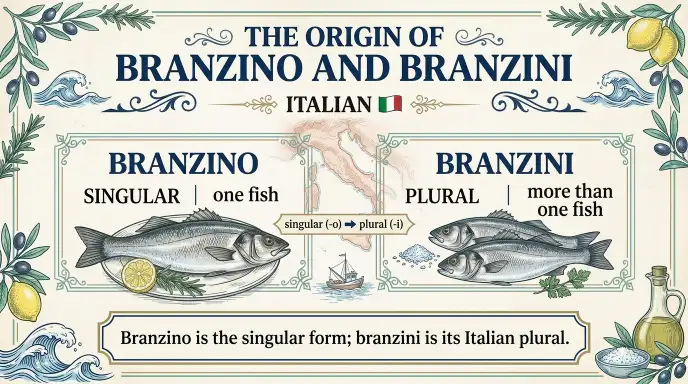
Branzino comes from Italian.
The word is associated with the European sea bass and is widely used in Italian culinary language.
Italian nouns often change their endings when they become plural. In this case:
branzino : branzini
The singular ending o changes to i in the plural.
This pattern appears in many Italian masculine nouns.
For example:
branzino = one
branzini = more than one
English restaurant terminology has adopted branzino directly from Italian, which is why the Italian singular form is now familiar to many English speaking diners.
Branzino vs Branzini: Singular and Plural
The most important difference between the two words is grammatical number.
Branzino refers to one fish.
Example:
“The chef grilled one branzino.”
Branzini refers to multiple fish.
Example:
“The chef grilled four branzini.”
The difference is similar to other Italian food terms that retain their original singular and plural forms in English.
If you are describing a single whole fish on a plate, branzino is the appropriate word.
If you are talking about several whole fish, branzini is the Italian plural.
British English vs American English Usage
Unlike words such as color/colour or favorite/favourite, there is no major British American spelling difference between branzino and branzini.
The distinction comes from Italian grammar.
In both British and American English, branzino can be used to refer to the fish or a dish featuring the fish.
Example:
“I ordered grilled branzino.”
When referring to multiple fish, branzini may be used, especially by restaurants and food writers familiar with Italian terminology.
Example:
“The chef prepared several branzini for the dinner.”
However, English speakers do not always preserve the Italian plural consistently. In ordinary English, you may also see branzino used more generally as a food name.
Which Form Should You Use?
Use branzino when referring to one fish.
Correct:
“The restaurant serves whole branzino.”
Use branzini when specifically referring to multiple fish using the Italian plural.
Correct:
“The chef prepared three branzini.”
For a restaurant menu or food article, follow the style of the establishment or publication. If the menu uses branzino as the name of the dish, keeping that wording can be perfectly natural even when the dish is discussed more generally.
The safest grammatical rule is:
One = branzino
More than one = branzini
Common Mistakes with Branzino and Branzini
Mistake 1: Using Branzini for One Fish
Incorrect:
“I ordered one whole branzini.”
If you are using the Italian singular/plural distinction, the correct form is:
“I ordered one whole branzino.”
Mistake 2: Treating Branzino and Branzini as Different Fish
Branzino and branzini do not refer to two different types of fish.
They are singular and plural forms of the same Italian word.
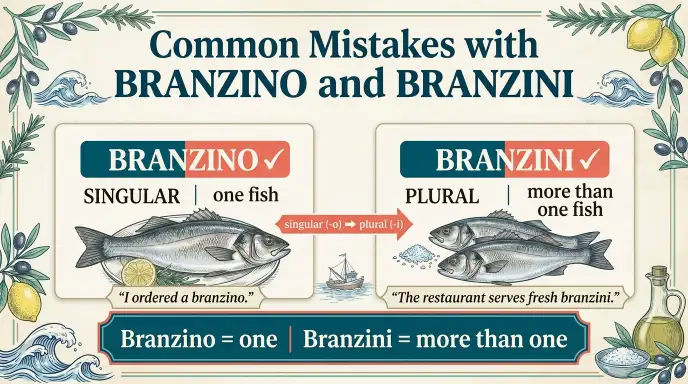
Branzino = one
Branzini = more than one
Mistake 3: Assuming Branzini Is a Different Dish
Branzini is not a different preparation or recipe.
It simply refers to multiple branzino fish.
For example:
“Grilled branzino” can describe one fish or a dish featuring the fish.
“Grilled branzini” specifically refers to multiple fish when the Italian plural is being used.
Mistake 4: Changing the Spelling Randomly
When writing about Italian food, consistency is helpful.
If you are using branzino as the singular and branzini as the plural, maintain that distinction throughout the article.
Branzino and Branzini in Everyday Examples
Restaurant Menus
“Whole roasted branzino served with lemon and herbs.”
“Two branzini were prepared for the table.”
Recipes
“This recipe uses one whole branzino.”
“For a larger dinner, prepare two branzini.”
Food Reviews
“The grilled branzino had crisp skin and tender white flesh.”
“The restaurant specializes in Mediterranean style branzini.”
Shopping
“I bought a fresh branzino for dinner.”
“The seafood market had several branzini available.”
Casual Conversation
“Have you ever tried branzino?”
“We ordered two branzini for the table.”
How Is Branzino Usually Served?
Branzino is popular because it can be prepared in several ways.
Common preparations include:
- grilled branzino
- roasted branzino
- baked branzino
- whole branzino
- pan seared branzino
- branzino with lemon and herbs
- Mediterranean style branzino
The fish is often served whole, although filleted preparations are also common.
Its mild flavor makes it suitable for simple seasonings such as lemon, garlic, olive oil, herbs, and vegetables.
Branzino vs Branzini: Easy Way to Remember
The easiest rule is:
Branzino = one
Branzini = many
Think of the final letters:
o : singular
i : plural
So:
one branzino
two branzini
You can use the same basic pattern when recognizing other Italian masculine nouns that change from o to i in the plural.
Branzino and Branzini: Quick Comparison
Branzino
Meaning: European sea bass.
Number: Singular.
Language: Italian.
Use: One fish.
Example: “The chef prepared one branzino.”
Branzini
Meaning: European sea bass.
Number: Plural.
Language: Italian.
Use: Two or more fish.
Example: “The chef prepared three branzini.”
Branzino or Branzini: Google Trends & Usage Data
Searches for branzino and branzini are closely connected with restaurant menus, recipes, Mediterranean cuisine, seafood, and Italian food terminology.
Branzino tends to be the more familiar form for English speaking diners because restaurants often use it as the name of the fish or dish. Branzini appears when writers, chefs, or diners specifically use the Italian plural.
Search interest can also increase around recipes, restaurant dining, seafood preparation, and Mediterranean cooking.
The important distinction is not popularity but grammatical number:
Branzino = singular
Branzini = plural
Frequently Asked Questions
Q1. Are branzino and branzini the same?
Yes. Branzino and branzini refer to the same type of fish. Branzino is the Italian singular form, while branzini is the Italian plural form.
Q2. Is branzino a high quality fish?
Yes. Branzino is widely considered a high quality food fish because it has delicate, flaky white meat and a mild flavor. It is especially popular in Mediterranean cuisine.
Q3. What does branzini taste like?
Branzini has a mild, slightly sweet flavor with tender, flaky white meat. Its taste is generally delicate rather than strongly fishy, making it popular with people who prefer lighter tasting seafood.
Q4. What is branzini fish?
Branzini is the plural of branzino, the Italian name commonly used for European sea bass. It is a Mediterranean fish often prepared whole, grilled, roasted, or baked.
Q5. Why is branzino fish expensive?
Branzino can be relatively expensive because of its popularity, farming and production costs, transportation, and demand in restaurants. Whole fish preparation and sourcing can also affect its price.
Q6. Is branzino a tilapia?
No. Branzino is not tilapia. Branzino is commonly used for European sea bass, while tilapia belongs to a different group of freshwater fish. They also differ in flavor and texture.
Q7. What is another name for branzino?
Another common name for branzino is European sea bass. It is also known by regional names such as loup de mer in French and lubina in Spanish.
Q8. Which fish is better, branzino or salmon?
It depends on personal preference. Branzino has a mild, delicate flavor and flaky white meat, while salmon has a richer, stronger flavor and a higher fat content. Both are popular choices for different dishes.
Conclusion
Branzino and branzini are both correct, but they are not interchangeable when following the Italian singular and plural forms. Branzino is singular and refers to one European sea bass, while branzini is plural and refers to two or more. The distinction comes from Italian grammar rather than a British or American spelling difference.
When ordering or describing one whole fish, you can say “a branzino.” When discussing several fish, “branzini” is the appropriate Italian plural. In English speaking restaurants, however, branzino is often used as the familiar name of the fish or dish, so you may see it used frequently even in broader food description.
The easiest rule to remember is one branzino, two or more branzini. Once you understand this singular plural relationship, the difference between the two forms becomes simple and clear.
🔍 Find the Perfect Word:
Wilful or Willful? Correct Spelling, Meaning & Usage

Hi, I’m Ava Collins, a writer and English language enthusiast behind CorrectlyWritten. I’m passionate about making grammar simple, clear, and easy to understand. I write about grammar rules, confusing words, spelling, and everyday English usage to help readers write more accurately and confidently.








1 thought on “Branzini or Branzino? Meaning, Spelling, Usage & Differences ”