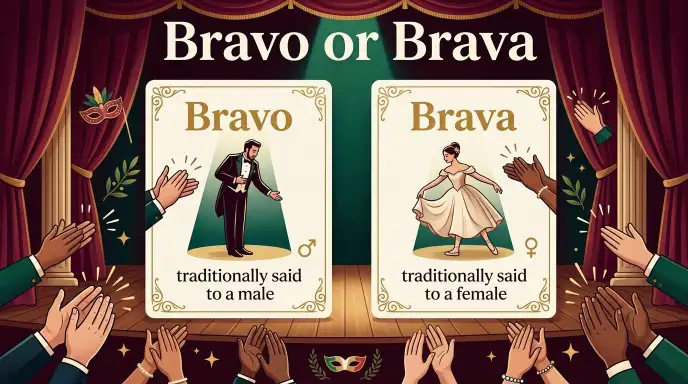
Bravo and brava are both correct words, but they are used in different situations. Bravo is the traditional Italian expression used to praise a man or to praise a performance in general. Brava is the feminine form used when praising a woman.
Both words express strong approval and are often heard after a great performance, speech, song, or achievement. For example, you can say “Bravo!” to praise a male performer and “Brava!” to praise a female performer. In modern English, bravo is much more common and is often used for anyone, regardless of gender.
The difference comes from Italian grammar, where adjectives change according to gender. English speakers have adopted bravo as a general expression of praise, while brava is still used when speakers want to follow the original Italian distinction. This guide explains the meaning, origin, pronunciation, grammar, differences, and everyday use of bravo and brava.
Bravo or Brava: Quick Answer
Bravo is traditionally used to praise a man, while brava is traditionally used to praise a woman.
Examples:
Bravo! You gave an excellent speech.
Brava! You gave an excellent performance.
In English, bravo is also commonly used as a general expression of praise. It can be directed at a person of any gender.
Brava is more closely connected to the original Italian gender distinction.
What Does Bravo Mean?
Bravo is an expression used to show approval, admiration, or appreciation.
It is especially common after a performance or impressive achievement.
For example:
- Bravo! That was an amazing performance.
- Bravo! You handled the situation perfectly.
- The audience shouted “Bravo!” after the concert.
- Bravo to everyone who helped with the project.
The word can express excitement, approval, or congratulations.
In English, bravo is often used as an interjection.
What Does Brava Mean?
Brava is the feminine form of the Italian word traditionally used to praise a woman.
It has the same basic meaning as bravo.
For example:
- Brava! Your performance was beautiful.
- The audience called out “Brava!” to the singer.
- Brava! You solved the problem perfectly.
The choice of brava follows the Italian grammatical pattern.
In Italian, adjectives can change form based on gender and number. This is why bravo and brava are different forms of the same word.
Bravo vs Brava: The Main Difference
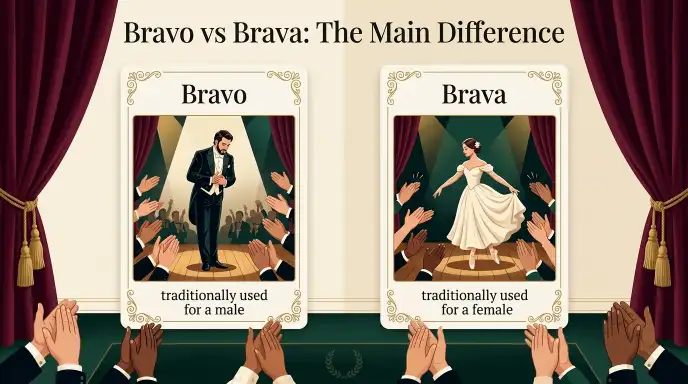
The main difference is gender in traditional Italian usage.
Bravo is the masculine singular form.
Brava is the feminine singular form.
The meaning is still the same: praise or approval.
Think of it this way:
Bravo = praise for a man
Brava = praise for a woman
However, English has adopted bravo as a broader expression. Because of this, English speakers often say bravo to praise anyone.
Is Bravo Only for Men?
No. In modern English, bravo is not limited to men.
English speakers often use bravo as a general expression of praise.
For example:
Bravo! That was an excellent presentation.
The speaker does not need to know the person’s gender to use bravo in English.
This differs from traditional Italian usage, where the form changes according to gender.
If you are using the expression in an Italian context, the distinction between bravo and brava matters more.
Is Brava Only for Women?
Traditionally, yes.
Brava is the feminine singular form in Italian.
It is used when praising one woman.
For example:
Brava! Hai cantato benissimo.
This means:
Well done! You sang very well.
When speaking English, however, many people simply use bravo instead.
Bravo and Brava in Italian
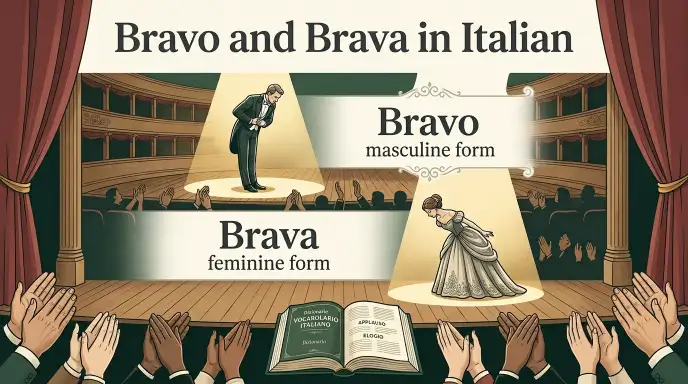
The difference becomes clearer when you look at the original Italian forms.
Bravo is masculine singular.
Brava is feminine singular.
There are also plural forms:
Bravi is used for a group of men or a mixed:gender group.
Brave is used for a group of women.
This follows normal Italian adjective agreement.
So the pattern is:
Bravo: one man
Brava: one woman
Bravi: men or a mixed group
Brave: women
English usually does not follow this full pattern. The borrowed word bravo is far more common in English than the other forms.
The Origin of Bravo
Bravo comes from Italian and is related to a word meaning brave, skilled, excellent, or well done.
The word became strongly associated with public praise.
It became especially popular in connection with theater, opera, concerts, and other performances.
Audiences could shout “Bravo!” to show that they admired a performer’s work.
Over time, English adopted the expression.
Today, bravo is familiar in many English:speaking countries.
The Origin of Brava
Brava comes from the same Italian word as bravo.
The final :a reflects the feminine singular form in Italian.
The word does not have a completely different meaning from bravo.
Instead, it is the feminine grammatical form.
This is why bravo and brava are closely related.
British English vs American English
Both bravo and brava can be understood in British and American English.
However, bravo is much more common in English overall.
British English:
Bravo! That was a wonderful performance.
American English:
Bravo! That was a wonderful performance.
The meaning remains the same.
Brava is also understood, especially in contexts connected with Italian culture, opera, music, theater, or international performance.
There is no major British:American spelling difference between these forms.
Which One Should You Use?
Choose the form based on the context.
Use bravo when:
- You are speaking English.
- You want a general expression of praise.
- You are praising a man.
- You are praising a mixed or unspecified group.
- You want the most familiar English form.
Use brava when:
- You are following traditional Italian usage.
- You are praising one woman.
- You want to reflect the feminine Italian form.
- The context is strongly connected with Italian language or culture.
For everyday English, bravo is usually the safer and more familiar choice.
Common Mistakes With Bravo or Brava
The most common confusion comes from treating bravo and brava as completely different words.
They are actually related forms.
Mistake 1: Thinking Brava Means Something Different
Brava does not mean a different kind of praise.
It is the feminine form of bravo in Italian.
Mistake 2: Using Brava for a Man
In traditional Italian usage, brava is feminine.
For one man, use bravo.
Mistake 3: Assuming Bravo Is Always Masculine in English
This is not always true.
Modern English commonly uses bravo as a general expression of praise.
So you may hear:
Bravo! You did it!
even when the person being praised is a woman.
Mistake 4: Thinking Brava Is Incorrect
Brava is not a spelling mistake.
It is a legitimate Italian feminine form.
The important point is context.
Bravo in Everyday English
Bravo can be used in many situations.
After a Performance
Bravo! That was an incredible performance.
After an Achievement
Bravo! You completed the project ahead of schedule.
In Written Communication
Bravo to the entire team for completing the event successfully.
In Casual Conversation
Bravo! You finally fixed the problem.
The word can sound enthusiastic and celebratory.
Brava in Everyday Examples
Brava is often used when the speaker wants to follow the Italian feminine form.
Examples:
- Brava! You played that song beautifully.
- Brava, Maria!
- The audience shouted “Brava!” after her performance.
- Brava! You worked very hard on this project.
In English:speaking settings, you may also hear bravo in the same situations.
Bravo or Brava After a Performance
Performance settings are one of the most common places where these words appear.
You may hear them after:
- an opera
- a concert
- a theater performance
- a speech
- a dance
- a musical performance
- a successful presentation
Traditional Italian usage follows gender.
Bravo for one man.
Brava for one woman.
English often uses bravo for both.
Bravo or Brava in Formal Writing
Both words can appear in writing, but they are more common in expressive or conversational contexts.
For example:
Bravo to the entire team for completing the project.
This sounds natural in a congratulatory message.
In formal business writing, a more direct expression may be better:
Congratulations to the entire team on completing the project.
The choice depends on the tone.
Bravo sounds warm, enthusiastic, and appreciative.
Brava can add an Italian or artistic tone.
Can You Say Bravo to a Woman?
Yes.
In modern English, bravo is commonly used as a general expression of praise.
For example:
Bravo! You gave an outstanding presentation.
This is understandable and natural in English.
If you want to follow traditional Italian grammar, you can use brava for one woman.
Both forms can therefore appear in English, but they reflect different usage traditions.
Can You Say Brava to a Man?
In traditional Italian usage, no.
Brava is the feminine singular form.
For one man, the traditional form is bravo.
For example:
Bravo, Marco!
not:
Brava, Marco!
If you are speaking English rather than Italian, bravo is the familiar general form.
Bravo, Brava, Bravi, and Brave
The four forms come from Italian.
Bravo: one man
Brava: one woman
Bravi: two or more men, or a mixed group
Brave: two or more women
Examples:
Bravo, Luca!
Brava, Sofia!
Bravi, ragazzi!
Brave, ragazze!
English usually does not use all four forms in everyday conversation. Bravo is the form English speakers are most likely to recognize and use.
Is Bravo the Same as Well Done?
In many situations, yes.
Bravo can communicate a meaning similar to:
- Well done!
- Excellent!
- Great job!
- Good work!
- Congratulations!
However, the tone can be different.
Bravo often sounds more expressive or theatrical.
For example:
Bravo! What a performance!
sounds more enthusiastic than:
Good job.
Is Bravo the Same as Congratulations?
Not exactly.
Congratulations focuses on celebrating someone’s achievement or success.
Bravo focuses more strongly on praise and approval.
For example:
Congratulations on your graduation.
This celebrates an important life event.
Bravo on that performance!
This praises the quality of the performance.
The two expressions can sometimes be used in similar situations, but their emphasis is different.
Quick Comparison: Bravo vs Brava
Bravo
Meaning: A traditional masculine Italian form of praise
Traditional use: One man
Modern English use: General praise for a person or performance
Example: Bravo! That was excellent.
Brava
Meaning: Feminine Italian form of praise
Traditional use: One woman
Modern English use: Often used to retain the Italian feminine distinction
Example: Brava! That was a beautiful performance.
Key Takeaways
- Bravo and brava are both correct.
- Bravo is the masculine singular Italian form.
- Brava is the feminine singular Italian form.
- Both express praise or approval.
- English commonly uses bravo as a general expression.
- Brava is especially useful when following traditional Italian usage for a woman.
- Bravo is common after performances and impressive achievements.
- Bravi and brave are the Italian plural forms.
- The best choice depends on the language and context.
Frequently Asked Questions
Q1. Do you say bravo or brava to a female actress?
Traditionally, brava is used when praising a female performer, while bravo is used for a male performer. In English, however, bravo is commonly used for anyone.
Q2. Is brava the same as bravo?
Brava and bravo have the same basic meaning: “well done.” The difference is grammatical in Italian, where brava is feminine and bravo is masculine.
Q3. Do Italians say “bravo”?
Yes. Italians use bravo as an expression of praise, especially for a male performer or someone who has done something well. The form changes according to gender and number.
Q4. What does “brava” mean?
Brava is the feminine form of the Italian bravo and means “well done” when addressing or praising a woman or female performer.
Q5. When to use bravo or brava?
Use bravo for a male and brava for a female when following traditional Italian grammatical agreement. In English, bravo is often used regardless of gender.
Q6. When to use brava?
Use brava when praising a woman or female performer in Italian. For example, after a great performance, you can say, “Brava!”
Q7. Can I say “bravo” to a girl?
Yes. In everyday English, bravo can be said to a girl or woman as a general expression of praise. In Italian, brava is the feminine form.
Q8. When to use bravo?
Use bravo to express admiration or approval, especially after an impressive performance or achievement. In Italian, it is traditionally the masculine singular form.
Q9. Is bravo a compliment?
Yes. Bravo is a compliment that means “well done” or expresses strong approval of someone’s performance or achievement.
Conclusion
Bravo and brava both express praise, but their traditional uses are different. Bravo is the masculine singular form in Italian, while brava is the feminine singular form. Both can mean something like “well done,” “excellent,” or “great job.”
English has adopted bravo as a common expression of praise. Because of this, English speakers often say bravo to anyone, including women. Brava is still correct and is useful when following traditional Italian usage for a woman.
The easiest rule is to remember the original Italian distinction. Use bravo for one man and brava for one woman. In general English, bravo works as a broad expression of approval. If you are writing about music, opera, theater, dance, or another performance, either form may appear depending on the language and style of the speaker.
🔤 Discover Related Articles:
Allot or Alot? Correct Spelling, Meaning, Usage & Examples
Choked or Chocked? Correct Spelling, Meaning, Uses & Examples

Hi, I’m Ava Collins, a writer and English language enthusiast behind CorrectlyWritten. I’m passionate about making grammar simple, clear, and easy to understand. I write about grammar rules, confusing words, spelling, and everyday English usage to help readers write more accurately and confidently.








1 thought on “Bravo or Brava? Meaning, Differences, Usage & Examples ”