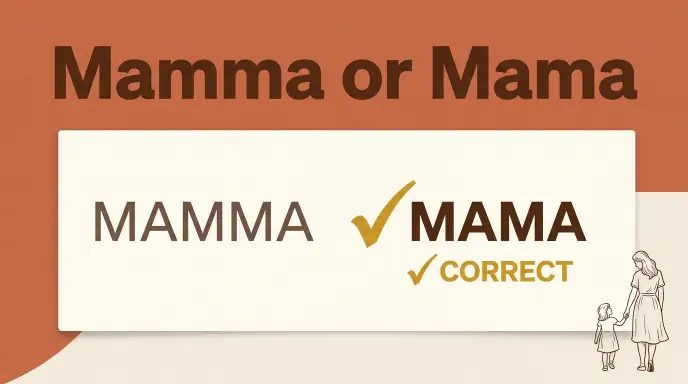
Mama is the more common modern spelling, while mamma is also correct and is used as an alternative spelling for “mother.” If you have searched for “mamma or mama,” you may be wondering which word is right and when to use each one.
The confusion is easy to understand because both words have the same basic meaning and sound very similar. In modern everyday English, mama is usually the safer and more natural choice, especially in American English. Mamma is less common and can sound more traditional, old:fashioned, or affectionate. The choice can also depend on the country, family, and style of writing.
Both forms can refer to a mother, especially when used as a familiar or affectionate name. In this guide, you will learn the meaning, origin, British and American usage, common mistakes, everyday examples, and the best spelling to use in different situations. By the end, you will know exactly when to write mama and when mamma may be a better choice.
Mamma or Mama : Quick Answer
Which Spelling Is Correct?
Both mama and mamma can be correct.
Mama is the more common modern spelling.
Mamma is an alternative spelling that is less common in modern English.
Examples:
- I love my mama.
- Mama, can you help me?
- She called her mamma before going to bed.
- His mamma was waiting at home.
The Easy Rule
Use mama if you want the most common and simple modern form.
Use mamma when the context, style, or personal preference calls for the traditional spelling.
For most general English writing:
Mama is the best default choice.
Definition and Meaning of Mamma or Mama
What Does Mama Mean?
Mama is an informal and affectionate word for mother.
It is often used by children, families, and adults when speaking warmly about their mother.
Examples:
- “My mama makes the best food.”
- “I called Mama last night.”
- “Her mama was proud of her.”
The word is usually warm and personal rather than formal.
What Does Mamma Mean?
Mamma also means mother.
It is an alternative form of mama. It may sound more traditional or old:fashioned in some varieties of English.
Examples:
- “Her mamma took care of the children.”
- “He ran to his mamma.”
- “My mamma always told me to be kind.”
The meaning is generally the same as mama.
Is Mama a Formal Word?
No. Mama is an informal term.
In formal writing, mother is usually better.
For example:
Informal:
My mama helped me with my homework.
Formal:
My mother helped me with my homework.
Context and Usage
The right choice depends on the tone of your writing.
| Word | Meaning | Tone |
| Mama | Mother | Informal, warm, common |
| Mamma | Mother | Informal, traditional, less common |
| Mother | Female parent | Neutral and formal |
The Origin of Mamma or Mama
Where Does Mama Come From?
Mama is a familiar word for mother found in many languages and cultures.
Words similar to mama appear in many languages. This is partly because simple sounds such as ma are easy for young children to produce.
English adopted mama as an affectionate term for mother.
Where Does Mamma Come From?
Mamma is an older or variant form of the same basic word.
English has used forms such as mamma for many years. Over time, mama became a common modern spelling, especially in American English.
The two spellings remain in use, but they do not have equal frequency in every English:speaking community.
Why Are There Two Spellings?
The difference comes mainly from language history, regional use, and spelling preferences.
English has many words with more than one accepted form. Family words often develop different spellings because they are used in informal speech.
For example:
- mama
- mamma
- mommy
- mummy
- mom
- mum
These words can all refer to a mother, but their use depends on region, age, family preference, and context.
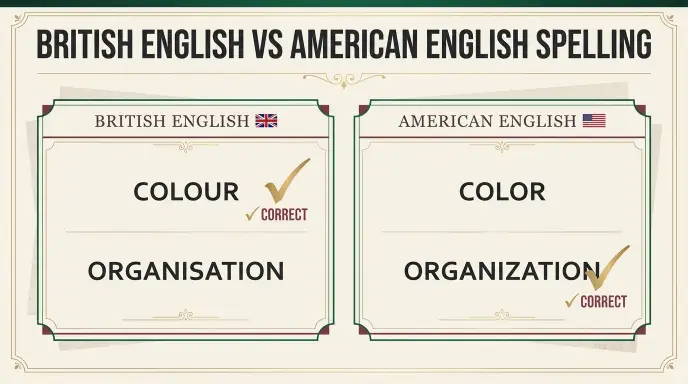
British English vs American English Spelling
Mama in American English
Mama is widely understood and commonly used in American English.
Examples:
I called my mama this morning.
Mama always knows what to say.
Mamma in British English
Mamma can be found in British English, but it is less common in modern everyday writing than mama.
British English also commonly uses words such as:
- mum
- mummy
- mother
So a British speaker may be more likely to say:
I asked my mum.
rather than:
I asked my mamma.
British vs American Comparison
| Feature | British English | American English |
| Mama | Correct | Correct and common |
| Mamma | Correct alternative | Correct alternative |
| Mum | Very common | Less common |
| Mom | Less common | Very common |
| Mother | Common and formal | Common and formal |
| Mummy | Common for children | Less common |
| Mommy | Less common | Common for children |
Is Mamma Wrong in American English?
No.
Mamma is not simply a spelling mistake. It can be used as an alternative form of mama.
However, if you want natural modern American English, mama is usually the better choice.
Which Spelling Should You Use?
For American Readers
Choose mama for general informal writing.
My mama taught me how to cook.
Mamma can still be used if it fits a personal, traditional, or literary style.
For British and Commonwealth Readers
Both forms can be understood, but British speakers often prefer mum, mummy, or mother depending on the situation.
If your goal is simple international English, mama is easy to understand.
For Global English
For websites, blogs, social media, and general content, mama is usually the safest choice.
It is short, familiar, and widely understood.
For Personal Writing
Family preference matters.
If someone calls their mother Mamma, there is no need to change it to Mama.
Personal names and family terms can follow individual preference.
Professional Advice
Use:
Mama → for common modern informal English.
Mamma → for a traditional, personal, literary, or stylistic choice.
Mother → for formal writing.
Common Mistakes with Mamma or Mama
Mistake 1: Thinking Mamma Is Always Wrong
Incorrect idea:
“Mamma” is always a spelling mistake.
This is not true.
Mamma is an accepted alternative form of the word.
Mistake 2: Using Mama in Formal Writing
Informal:
My mama is a teacher.
More formal:
My mother is a teacher.
For academic, business, or official writing, mother is usually more appropriate.
Mistake 3: Confusing Mama With Mom or Mum
These words have the same basic meaning, but their regional use differs.
- Mama : widely understood
- Mom : common in American English
- Mum : common in British English
- Mother : formal and neutral
Mistake 4: Assuming Spelling Changes the Meaning
In most cases, mama and mamma have the same basic meaning.
The main difference is style, frequency, and regional preference.
Mamma or Mama in Everyday Examples
In Emails
In a personal email, mama can sound warm and natural.
I am going to visit my mama this weekend.
In a formal email, mother is usually better.
My mother will attend the event.
In News Writing
News writing normally uses mother because it is neutral.
However, mama or mamma may appear when quoting a person.
“My mama always encouraged me,” she said.
The writer keeps the speaker’s original wording.
On Social Media
Mama is common in captions and personal posts.
Happy birthday to my amazing mama! ❤️
It can also appear in family:focused content.
Life is better with Mama around.
In Formal Writing
Formal writing usually prefers mother.
Instead of:
Her mama attended the meeting.
Use:
Her mother attended the meeting.
This makes the sentence sound more neutral and professional.
In Stories and Literature
Both forms can work.
Mama may create a modern or warm tone.
Mamma may create a traditional or old:fashioned feeling.
The writer can choose the form that fits the character and setting.
Mamma or Mama : Google Trends & Usage Data
What Do People Search For?
The search phrase “mamma or mama” usually reflects a spelling or word:choice question.
People may want to know:
- Which spelling is correct?
- Is mamma a real word?
- Is mama more common?
- Is mamma British or American?
- Should I write mama or mother?
- What is the difference between mama and mamma?
How Search Interest Works
Google Trends shows relative search interest, not a fixed worldwide number of searches.
Search patterns can vary by country and language.
In the United States, mama is a familiar form. In the United Kingdom and other Commonwealth countries, people also commonly use mum, mummy, or mother.
Usage by Context
| Context | More Natural Choice |
| American casual speech | Mama |
| Family messages | Mama |
| Social media | Mama |
| Formal writing | Mother |
| British casual speech | Mum |
| Traditional style | Mamma |
| Children’s speech | Mama / Mummy / Mommy |
The key point is that mama and mamma are both understood, but mama is generally the better modern default.
Mamma vs Mama : Comparison Table
Side:by:Side Comparison
| Feature | Mama | Mamma |
| Meaning | Mother | Mother |
| Correct spelling | Yes | Yes |
| Modern usage | More common | Less common |
| Tone | Warm and informal | Traditional or informal |
| American English | Common | Less common |
| British English | Understood | Less common |
| Formal writing | Usually avoid | Usually avoid |
| Best formal alternative | Mother | Mother |
| Example | I love my mama. | I love my mamma. |
FAQs About Mamma or Mama
Q1. Do you spell mama or mamma?
Both mama and mamma are correct spellings, but mama is more common in American English.
Q2. How do you write mamma?
Mamma is spelled M:A:M:M:A and is another spelling of mama, meaning mother.
Q3. Can I call a girl mama?
Yes, you can call a girl mama as a nickname, but the meaning depends on the relationship and context.
Q4. Can you spell mama like mamma?
Yes, mama can be spelled mamma; both forms are used to refer to a mother.
Q5. Is mama a romantic word?
Mama is not normally a romantic word, but it can be used affectionately or romantically in some contexts.
Q6. Can I say momma?
Yes, momma is an informal spelling of mama or mom, often used affectionately.
Q7. Why do people say momma?
People say momma as a warm, informal way to refer to their mother, especially in family or casual speech.
Q8. How do I reply to mama?
You can reply naturally with “Yes?”, “What’s up?”, or “Hey, mama!”, depending on the context.
Q9. What does “momma” mean in slang?
In slang, momma can mean a mother, but it may also be used as an affectionate nickname for a woman or girl.
Conclusion: Mamma or Mama?
Mama and mamma can both mean mother, so neither word is simply wrong. The main difference is how common and natural each spelling feels in modern English. Mama is the more common modern choice, especially in American English. It works well in family conversations, personal messages, social media posts, and informal writing. Mamma is also correct, but it is less common and may give your writing a more traditional, old:fashioned, or personal feel.
For formal writing, neither mama nor mamma is usually the best choice. In those situations, mother is clearer and more professional. British readers may also expect mum or mummy, while American readers often use mom or mama.
The best rule is simple: choose mama when you want a common, modern, and friendly word for mother. Choose mamma when its traditional style or personal meaning fits your context. If you need a neutral or formal term, use mother.
Meta Description: Mamma or mama? Learn which spelling is correct, compare British and American usage, meanings, examples, origins, and common mistakes today.
Learn More Articles:
Complements or Compliments: Which Word Is Correct?
Lendor or Lender: Which Spelling Is Correct? Meaning & Examples
Indure or Endure: Which Is Correct? Meaning, Spelling & Examples

Hi, I’m Ava Collins, a writer and English language enthusiast behind CorrectlyWritten. I’m passionate about making grammar simple, clear, and easy to understand. I write about grammar rules, confusing words, spelling, and everyday English usage to help readers write more accurately and confidently.








2 thoughts on “Mamma or Mama: Which Is Correct? Meaning, Spelling & Usage ”