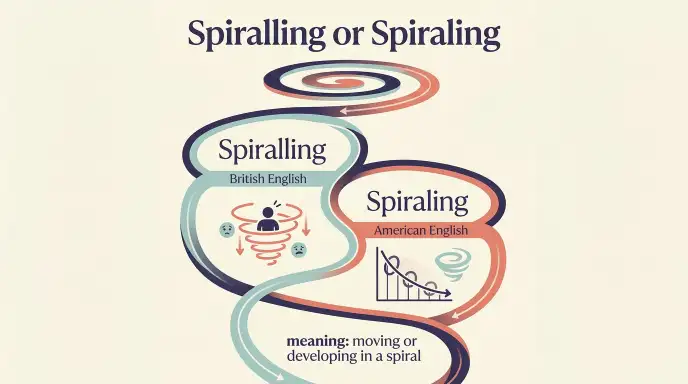
Spiralling and spiraling are both correct spellings, with spiralling used mainly in British English and spiraling used mainly in American English. The difference comes from the way British and American English form the present participle of verbs ending in a consonant followed by a single vowel and consonant.
The base verb is spiral, which means to move in a circular or winding path. It can also describe something that keeps increasing or decreasing rapidly. When the ending ing is added, British English commonly doubles the final l, giving spiralling, while American English usually keeps one l, giving spiraling. Both forms have the same meaning and pronunciation.
For example, British English may use “Prices are spiralling upward,” while American English commonly uses “Prices are spiraling upward.” The same difference appears in related forms such as spiralled and spiraled. Knowing the regional spelling pattern makes the choice simple. If you are writing for a British, Australian, or other Commonwealth audience, spiralling is generally the better choice. For American readers, spiraling is the standard form. Both spellings are correct when used consistently.
Spiralling or Spiraling : Quick Answer
Spiralling and spiraling are both correct.
The main difference is regional spelling:
- Spiralling : British English
- Spiraling : American English
Examples:
Prices are spiralling upward.
British English
Prices are spiraling upward.
American English
The meaning does not change.
Both forms can describe something moving in a spiral or changing rapidly in an ongoing pattern.
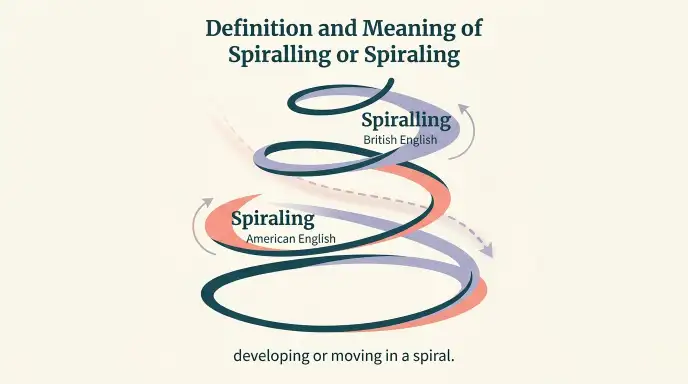
Definition and Meaning of Spiralling or Spiraling
What does spiralling mean?
Spiralling is the British English spelling of the present participle of spiral.
It can describe movement in a circular or winding path.
The plane was spiralling downward.
It can also describe a situation that keeps becoming more extreme.
The costs are spiralling out of control.
What does spiraling mean?
Spiraling is the American English spelling of the same word.
It has exactly the same meanings as spiralling.
The plane was spiraling downward.
Prices are spiraling upward.
Can spiralling describe positive and negative changes?
Yes. The word does not always describe something negative.
For example:
The company’s profits are spiraling upward.
However, spiraling is often used for situations that are becoming worse or harder to control.
The argument quickly turned into a spiraling conflict.
What does spiral mean as a verb?
The verb spiral can mean to move in a spiral or to develop through a pattern of continuous change.
For example:
The bird spiraled into the sky.
It can also describe a rapid change:
Costs continued to spiral upward.
The Origin of Spiralling or Spiraling
The word spiral comes from the Latin spira, meaning a coil or winding form. It entered English through French and became associated with a curved or circular shape.
Over time, spiral developed into both a noun and a verb.
As a noun, a spiral is a curved shape that winds around a central point.
The shell has a beautiful spiral pattern.
As a verb, spiral describes movement or development in a spiral pattern.
The smoke spiraled into the air.
The spelling difference appears when ing is added.
British English commonly doubles the final l:
spiral : spiralling
American English generally does not:
spiral : spiraling
The difference is part of the wider spelling distinction between British and American English.
British English vs American English Spelling
The main difference between spiralling and spiraling is regional spelling.
British English usually doubles the final l before ing in this word.
American English normally keeps one l.
| Base Verb | British English | American English |
| spiral | spiral | spiral |
| Present participle | spiralling | spiraling |
| Past tense | spiralled | spiraled |
| Present participle example | Prices are spiralling. | Prices are spiraling. |
| Past tense example | Costs spiralled upward. | Costs spiraled upward. |
The meaning remains the same in both varieties.
Other forms can follow the same regional pattern:
British: spiralling, spiralled
American: spiraling, spiraled
This is a spelling difference, not a difference in grammar or meaning.
Which Spelling Should You Use?
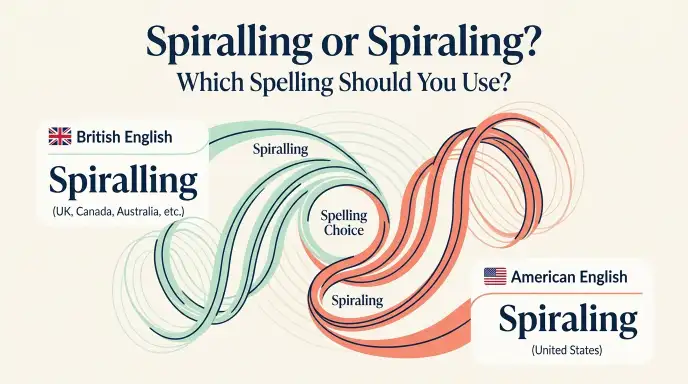
For British English
Use spiralling.
Inflation is spiralling upward.
This spelling fits standard British English conventions.
For American English
Use spiraling.
Inflation is spiraling upward.
This is the standard American spelling.
For Australian English
Spiralling is generally preferred because Australian English follows many British spelling conventions.
For Canadian English
Canadian English can show both British and American spelling patterns. Spiralling is commonly found, although usage can vary by publication and style guide.
For international writing
Choose the spelling that matches your target audience.
If the article is aimed at American readers, use spiraling.
If it is aimed at British or Commonwealth readers, use spiralling.
The most important point is consistency. Do not switch between spiralling and spiraling in the same article unless you are discussing the spelling difference itself.
Common Mistakes with Spiralling or Spiraling
Mistake 1: Assuming spiraling is always wrong
Spiraling is not a misspelling.
It is the standard American English form.
Mistake 2: Assuming spiralling is always wrong
Spiralling is also correct.
It is widely used in British English and other varieties influenced by British spelling.
Mistake 3: Mixing both forms
Avoid switching between the two spellings in one piece of writing.
For example, do not write:
Prices are spiralling upward, and costs are spiraling out of control.
If you are following British English, use spiralling consistently.
If you are following American English, use spiraling consistently.
Mistake 4: Changing the meaning because of the spelling
The two spellings have the same meaning.
The difference is regional.
Mistake 5: Confusing spiral with spiralling
Spiral is the base verb.
Spiralling and spiraling are its present participle forms.
Examples:
Costs are spiralling upward.
Costs are spiraling upward.
Spiralling or Spiraling in Everyday Examples
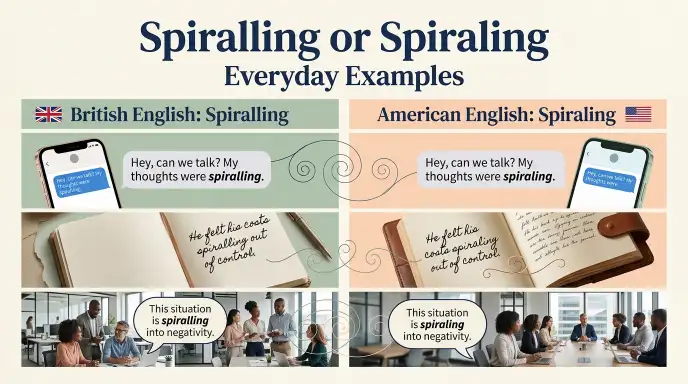
In emails
British English:
Energy costs are spiralling, so we need to review the budget.
American English:
Energy costs are spiraling, so we need to review the budget.
In news writing
British English:
Rising demand has caused prices to start spiralling.
American English:
Rising demand has caused prices to start spiraling.
On social media
My workload is spiraling this week!
This form is especially natural for an American audience.
For a British audience:
My workload is spiralling this week!
In formal writing
The study examines the factors behind spiraling costs.
For British English:
The study examines the factors behind spiralling costs.
For physical movement
The leaves were spiraling through the air.
British spelling:
The leaves were spiralling through the air.
Here, the word describes actual circular or winding movement.
For situations that become worse
The disagreement began spiraling out of control.
British English:
The disagreement began spiralling out of control.
The meaning remains unchanged.
Spiralling or Spiraling : Google Trends & Usage Data
Search interest for spiralling and spiraling varies mainly because English speakers in different countries follow different spelling conventions.
Spiraling is strongly associated with American English. Spiralling is more closely associated with British English and other varieties that follow British spelling patterns.
The difference can appear in searches about:
- Spiraling costs
- Spiraling prices
- Spiraling debt
- Spiraling inflation
- Spiraling anxiety
- Spiraling problems
- Spiraling downward
- Spiraling upward
British publications may use spiralling in these same expressions.
Search behavior can change over time and can vary by country. For practical writing, the regional spelling rule is more useful than a single search volume figure.
The key pattern is:
British English : spiralling
American English : spiraling
Both forms describe the same action or development.
Spiralling vs Spiraling: Quick Comparison
| Feature | Spiralling | Spiraling |
| Base word | spiral | spiral |
| Main variety | British English | American English |
| Meaning | Same | Same |
| Pronunciation | Same | Same |
| Present participle | Yes | Yes |
| Past form | spiralled | spiraled |
| Common phrase | spiralling costs | spiraling costs |
| Common phrase | spiralling downward | spiraling downward |
| Correct spelling | Yes | Yes |
Frequently Asked Questions
Q1. What does it mean to be spiraling?
To be spiraling means to experience a situation, thought, or emotion that keeps getting worse or more intense. It can describe someone becoming increasingly worried, upset, or overwhelmed.
Q2. What does spiralling mean in slang?
In slang, spiralling often means becoming increasingly anxious, upset, or overwhelmed, especially because of repeated negative thoughts. For example, “I started spiraling after reading that message.”
Q3. What does “spiralling” mean?
Spiralling means gradually moving into a more intense or difficult emotional or mental state. It can also literally mean moving in a spiral pattern.
Q4. How do you say spiraling?
Spiraling is pronounced approximately “SPY ruh ling.” The word comes from spiral, with the ending ing added.
Q5. Is it “spiraling” or “spiralling”?
Both spellings are correct. Spiraling is the standard American English spelling, while spiralling is commonly used in British English and other varieties that follow British spelling conventions.
Q6. How do you use spiral in a sentence?
You can use spiral as a noun or verb. For example, “The conversation began to spiral into an argument” or “The staircase follows a spiral.”
Q7. What is spiraling in a relationship?
Spiraling in a relationship usually refers to negative thoughts, worries, or conflicts becoming increasingly intense. For example, one unanswered message may lead to overthinking and further anxiety.
Q8. What is a synonym for spiral?
Depending on the context, synonyms for spiral include twist, coil, wind, rotate, escalate, worsen, and snowball. The best synonym depends on if you mean a physical shape or a worsening situation.
Conclusion
Spiralling and spiraling are both correct spellings of the present participle of spiral. The difference is based mainly on regional spelling conventions rather than meaning. Spiralling is the standard form in British English, while spiraling is the standard form in American English.
Both words can describe circular movement, such as a bird spiralling through the air, or a situation that changes rapidly, such as spiralling costs or spiraling debt. The meaning stays the same regardless of the spelling.
When choosing between the two, consider your audience. Use spiralling for British English and other varieties that follow British spelling patterns. Use spiraling for American English. If you are writing for an international audience, either form can work, but consistency matters. Once you choose one spelling, use it throughout the article or document.
The easiest rule to remember is simple: British English uses spiralling, while American English uses spiraling. Both are correct, and neither should be treated as a spelling mistake when used in the appropriate variety of English.
📚 Every Word Matters!
Turkey or Türkiye? Correct Name, Meaning, Spelling & Usage

Hi, I’m Ava Collins, a writer and English language enthusiast behind CorrectlyWritten. I’m passionate about making grammar simple, clear, and easy to understand. I write about grammar rules, confusing words, spelling, and everyday English usage to help readers write more accurately and confidently.








2 thoughts on “Spiralling or Spiraling? Correct Spelling, Meaning, & Examples ”